
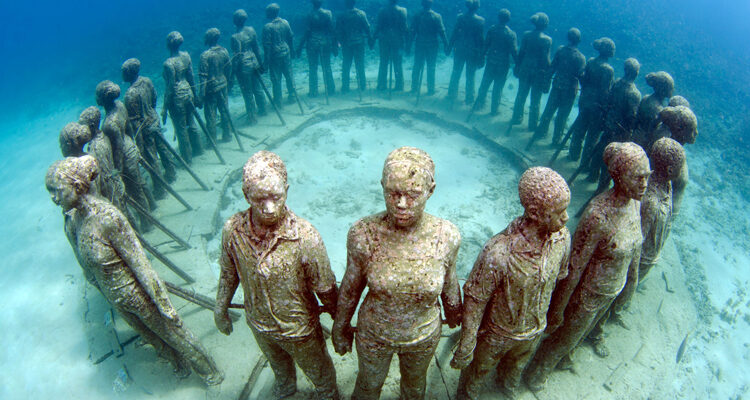
Saying art heals is usually a metaphor. In the Underwater Sculpture Park, it’s literally so. Look just a few metres off the West Coast of Grenada (aka the Spice Isle) shielded from the Atlantic in warmer Caribbean waters. There’s an ever growing number statues on the seabed healing their environmentally fragile surroundings. How?
These statues attract coral reef to regrow, gradually returning life where occasional hurricanes and constant humans have done damage over decades. After a 2-km boat ride north of the capital, St. George’s, you’re just a few metres above the Underwater Sculpture Park. Sitting here, you’ll agree this artistic approach to coral protection and preservation is a wise idea. But the best part?
If you can breathe through a snorkel and done a life preserver, you have all the gear and skills you need to see these statues in the quasi-flesh.

Mind, a bathing suit is also recommended.
Grenada welcomes visitors from all over the world, sometimes for years. The Park was created by British sculptor Jason deCaires Taylor. Students at the local art school volunteered to be smeared in plaster to make his casts. Over time, coral has colonized the artwork, transforming each piece into a living reef that supports marine life while easing pressure on the original surviving ecosystem. Healing.
One of the most photographed works, Vicissitudes, depicts a ring of children holding hands, facing outwards (defiantly?). Some people believe it’s recalling the countless enslaved Africans lost during the Middle Passage and the resilience of Grenadians, many descended from slaves. If so, silent tribute, it heals more than the environment.

If the water’s still on the day you visit — ours was slightly murky — you can see the Park in reach-out-and-don’t-touch perfection. Photography doesn’t do it justice. Consider the solitude you feel regardless of how many other divers you’re with, literally breathless, behind your periphery-blocking mask. Leave the selfie-stick on the boat.
Certified divers would have a better experience but the seabed is so shallow here, a simple snorkeller with big lungs is almost as free to interact with the art pieces face-to-face. A lifelong singer, I can control my breathing for up to a minute. That’s me in the red shirt approaching a parade of Jab Jabs (sucking in my gut after days of grilled fresh seafood and jerk chicken).
Jab Jab? It’s local patois from the French diable for devil or demon.
The Jab Jab is a horn-headed monstrous costume many Grenadians wear, slathering themselves in engine oil first, for annual Carnival celebrations of emancipation and cultural resilience. Interesting. These statues could be interpreted as a national-psyche defence, much as environmental.
Between breathless dips, our guide from local company ECO Dive explains that some Grenadians tell their children to behave or, at night, the Jab Jab will come steal them away. Search ‘Jab Jab, photos’ and for an insight into why Grenadian children are so well behaved in public.

Saving the best for last.
This visit was our final experience after nearly three full days of traveling Grenada. With this place’s orchestral singing wildlife and polychromatic flora whose vivid bouquets of scents constantly change, small wonder it’s called the Spice Isle. Yet somehow, this silent, unbreathable, blue-green picture show made an even deeper impression. Let’s call it healing.
*The writer’s trip was sponsored by Grenadian Tourism, but the story was not reviewed by them before publication.